
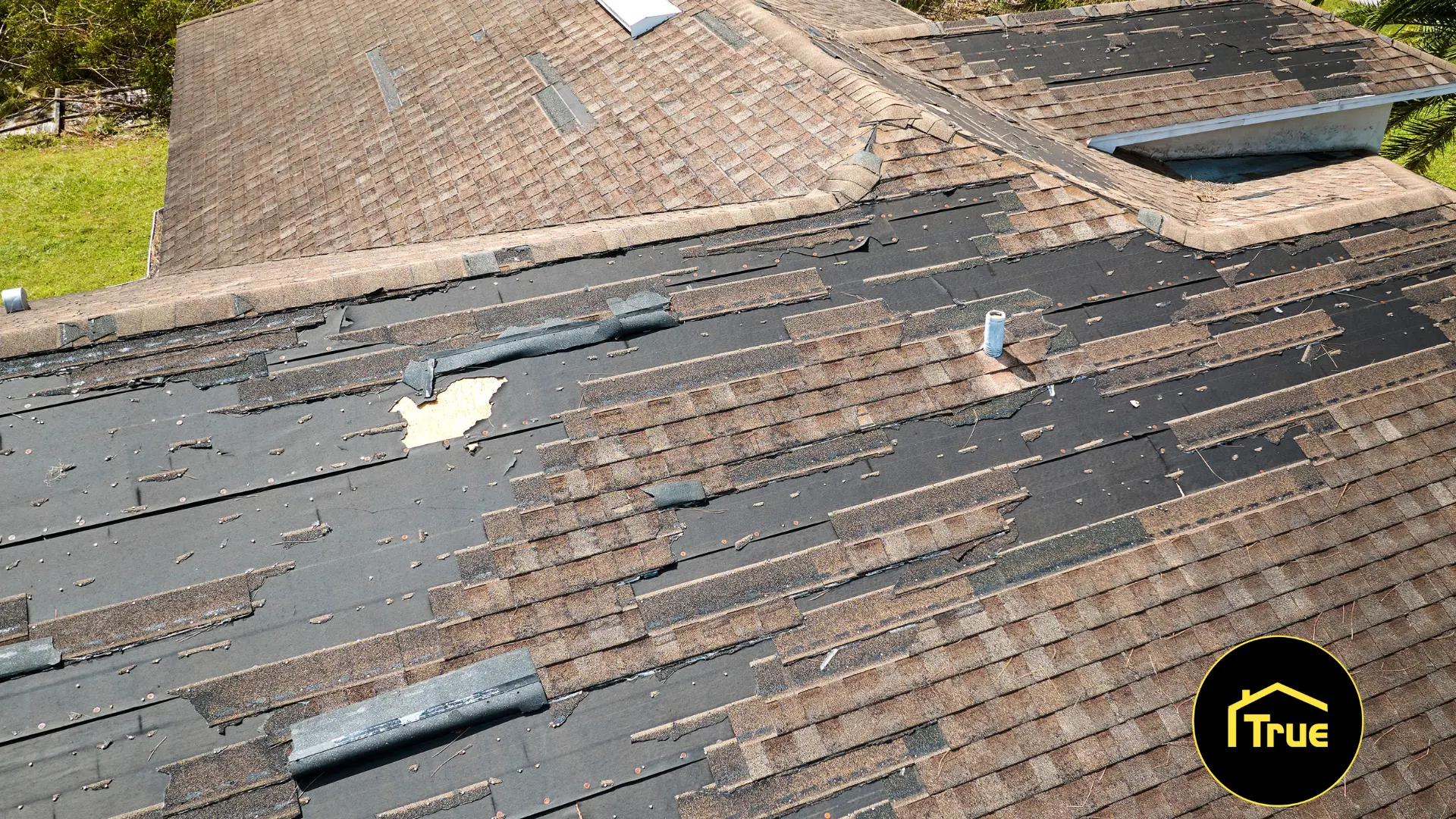
Yes. If shingles blew off and the underlayment is torn, the roof can leak at the next rain. If the felt is still intact, water may not come through yet. We look at the deck before we call the job a replacement.
A missing shingle is a gap in the overlap. Rain that used to run off the face can get under the course and sit on the felt. Torn felt, a lifted nail line, or a cracked pipe boot is how that water reaches the ceiling.
The ceiling stain is often not under the hole. Water runs down the felt, hits a seam or a nail, and shows up a few feet away, sometimes in the next room. That is why a bag of matching shingles from the driveway does not tell you where to nail them.
What to check from the ground
Do not climb a wet roof. From the yard, look for:
- Bare spots in the field, especially the windward slope. In Lakeland that is often the west side after a straight-line wind.
- Shingle pieces in the grass, on the lanai screen, or stuck in the downspout
- Granules piled at the gutter outlet. A few after a new roof are normal. A pile under one slope, with tabs in the yard, means that slope took the wind.
- A new stain on the ceiling under that slope, or a drip only when it rains
A stain means the insulation is already wet. That job starts as roof leak repair, not as a color match. Wet insulation holds water after the rain stops, so the drip can continue on a dry afternoon.
Count what you can see, then stop. Ten missing tabs on one course is a different job from a whole plane skinned down to the felt. You do not need the exact number from the yard. You need to know whether the wood is showing.
Where the water goes after the shingle is gone
A shingle roof sheds water in layers. The tabs overlap. Under them is felt or a synthetic underlayment. Under that is the deck. The shingle is the layer you see. The felt is the layer that still has to be continuous.
If the felt is scuffed but whole, the next rain may run off. If the felt is split at the nail line, or gone in a patch the size of a shingle, that rain has a path to the plywood. Plywood that stays wet gets soft. Soft plywood will not hold the nails of the replacement shingles. That is the point where “a few blew off” stops being a small repair.
Pipe boots and step flashing fail in the same wind and get blamed on the missing shingles. A boot cracked at the pipe will leak with every shingle still in place. We check the boots, the sidewall flashing, and the valley on the same visit. Missing shingles are not the only leak.
Repair the missing shingles, or replace the section
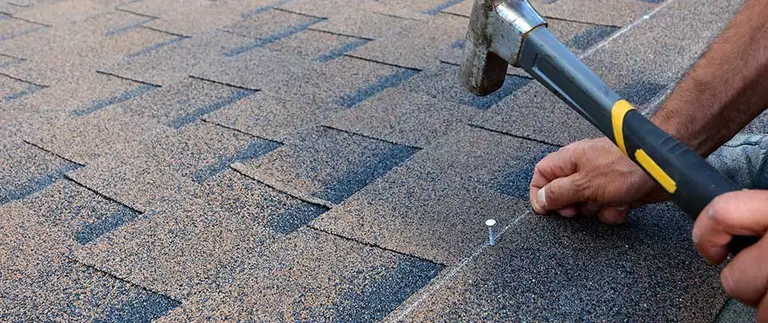
A few shingles from the same lot, on a sound deck, is a repair. We match the color as close as the current run allows. Florida sun fades a roof in a few years, so a new bundle will be darker. We set the nails in the right line, under the next course, and seal the exposed edge. Nails through the face of the tab are a new leak.
A patch is the wrong job when any of these are true:
- The deck is soft under the missing shingles
- The underlayment is gone, not just the shingles
- The repair would cover more than 25% of that section
That last one is the Florida code rule. The unit is the section, not the whole house. A small gable over the garage can cross 25% while the main roof looks fine. Measure the section before you approve a small patch. Details: what is the 25% roofing rule in Florida. If the section has to come off, that is roof repair or roof replacement, and we say which one after the inspection.
Patches from earlier this year count toward that quarter. If someone already repaired this slope after the last storm, tell us before we add another course.
Ridge caps, gutters, and the edge
A missing ridge cap leaks differently from a missing field shingle. Wind gets under the cap and peels it along the peak. Water then enters at the ridge and runs downhill inside the roof, so the stain can show up far from the peak. One missing cap on an otherwise tight field is usually a repair. A cap gone the length of the house, with felt torn under it, is the same conversation as a stripped plane.
The gutter at that eave matters the same day. Wind that takes shingles often pulls the gutter off the fascia, or packs it with granules and tabs until the next rain dumps back under the first course. We look at the hanger and the outlet while we are on the edge. If the fascia is soft, new shingles at the eave will not stay dry. Roofline gutters are our work. Screen-enclosure gutters are a different True company.
Oaks along Cleveland Heights and South Lakeland take a course off in a gust and leave the rest of the roof looking normal from the street. A ridge cap missing for a week is a slower leak than a whole plane gone the night of the storm. Both need a look. Only one of them is an emergency.
If the roof is open tonight
Cover is temporary. Call (813) 800-1800 or the 24/7 inspection line (863) 880-2041. We tarp when the deck is open or the felt is gone over a room, then schedule the shingle repair in daylight. A blue tarp is not a shingle. Sun and the next storm loosen it. The permanent nails go in after we can see the deck.
If the wood is not showing and the ceiling is dry, you can usually wait for a weekday inspection. Do not wait through a week of storms with felt hanging in the yard. Call.
We photograph what we find: the bare spot, the felt, the deck if it is open, and the ceiling if it stained. We do not file the claim, and we do not adjust it. Your carrier decides coverage. A photo of missing shingles is not a promise that they pay for a new roof.
Lakeland first, then Plant City and Winter Haven. Lakeland office: (863) 624-6590, 2829 Badger Rd #19. Plant City HQ: (813) 743-4487, 4000 N Frontage Rd.
License CCC1332725. 4.9 stars on Google, 240+ reviews. 12+ years on these roofs.